

CRM-RJ 870137 · RQE 20287 · Updated on 30/10/2026
What is carpal tunnel syndrome
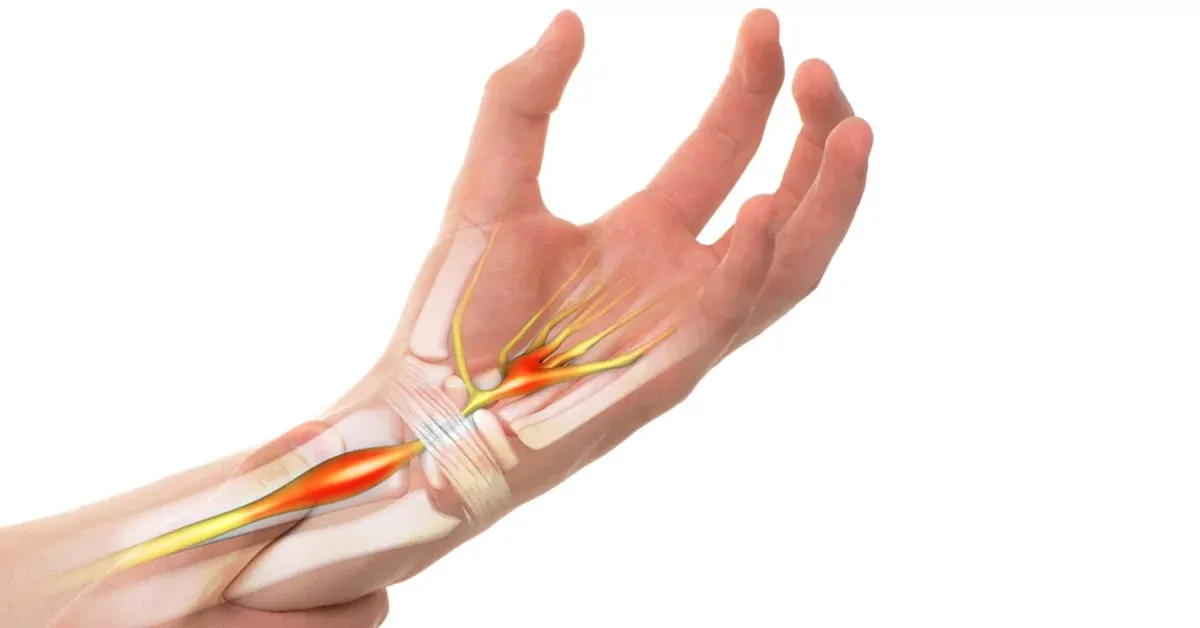
The carpal tunnel is a narrow canal at the base of the hand, formed by bones and a strong ligament. Nine tendons and the median nerve pass through it. When the space narrows or tissues swell, the nerve is compressed and stops working properly.
It is associated with repetitive wrist movements, pregnancy, diabetes, hypothyroidism, arthritis and obesity, but often no clear cause is found.
Symptoms
- tingling or numbness in the thumb, index finger, middle finger and part of the ring finger;
- symptoms that wake you at night and improve by shaking the hand;
- a feeling of swelling, even without visible swelling;
- weaker pinch strength and frequently dropping objects;
- in advanced stages, wasting of the muscle at the base of the thumb.
Seeking evaluation early matters: prolonged compression can cause permanent nerve damage.
Diagnosis
The doctor examines the hand with specific tests (such as Phalen and Tinel) and assesses sensation and strength. A nerve conduction study (EMG) confirms the compression, measures severity and helps decide between non-surgical treatment and surgery. Ultrasound can complement the evaluation.
Treatment
Mild and moderate cases
- night splint keeping the wrist neutral;
- posture adjustments and changes to repetitive tasks;
- physical therapy and nerve-gliding exercises;
- medication and, in selected cases, corticosteroid injection in the tunnel.
Surgery
Indicated when symptoms persist, strength or sensation are lost, or tests show significant nerve involvement. Carpal tunnel release cuts the ligament compressing the nerve. It is a quick procedure, usually outpatient and under local anesthesia.
See also trigger finger and tendinitis, which can accompany the condition.