

CRM-RJ 870137 · RQE 20287 · Updated on 30/10/2026
What is a knee replacement
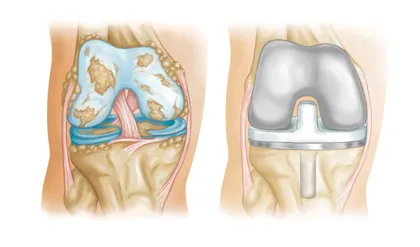
In surgery, the worn ends of the femur and tibia are resurfaced with metal and polyethylene components that reproduce the healthy joint. In a total replacement the whole knee is replaced. In a partial (unicompartmental) replacement only the worn region, when osteoarthritis is limited to one part of the knee.
There is also revision surgery, when an old implant must be exchanged, usually more complex.
When it is indicated
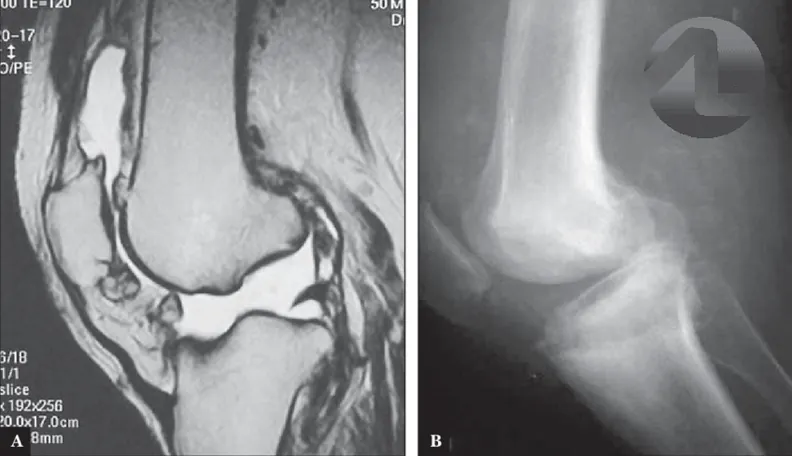
- advanced knee osteoarthritis with pain limiting daily life;
- failure of non-surgical treatment (physical therapy, medication, injections);
- significant knee deformity;
- sequelae of fractures and old injuries.
The indication is individual and takes into account exams, level of pain and general health.
How the surgery is done
It is done under anesthesia (spinal or general) and takes on average 1 to 2 hours. The surgeon removes the worn surfaces, adjusts limb alignment, tests stability and fixes the components. Modern techniques, such as navigated replacement, help position components accurately. In 2021 Dr. Daniel Ramallo opened the OrthoConstellation advanced knee arthroplasty course, with simulation of complex surgeries.
Recovery and rehabilitation
Physical therapy starts on the first day, with mobilization and gait training. In the first weeks the focus is regaining knee flexion and extension and controlling swelling. Light activities generally return in a few weeks, and full recovery can take a few months. Return to specific activities is guided individually.
Risks and care
Risks include infection, thrombosis, stiffness, persistent pain and long-term wear or loosening of components. All are discussed in the consultation and reduced with planning, prevention protocols and follow-up.