
CRM-RJ 870137 · RQE 20287 · Updated on 30/10/2026
What is a distal biceps rupture
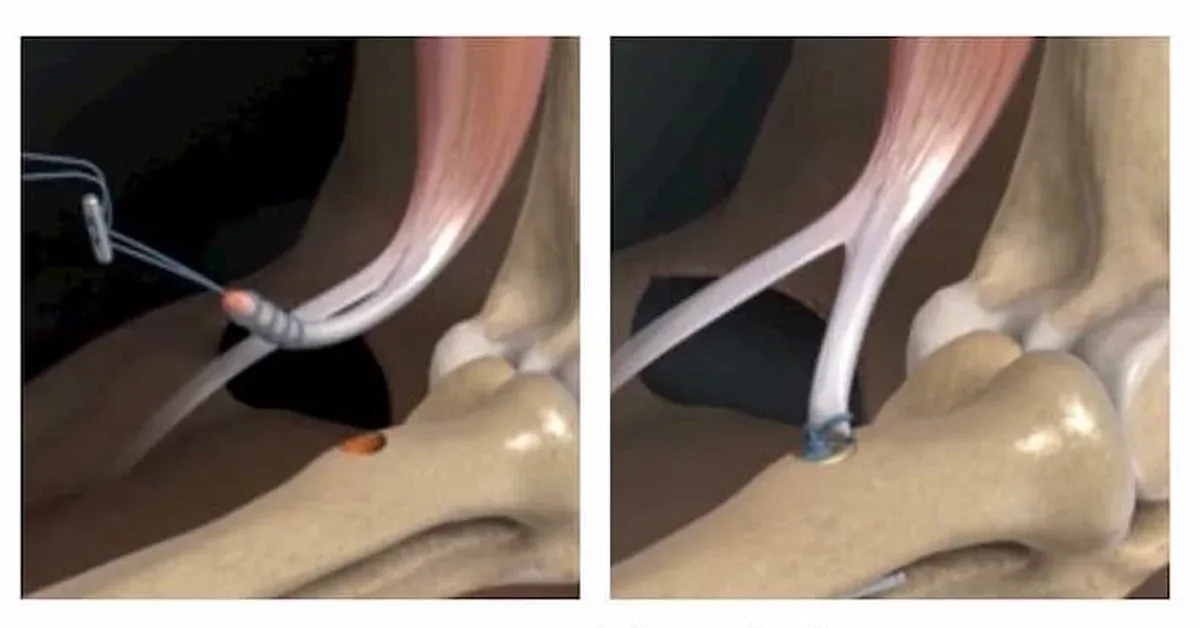
The biceps muscle attaches to the radius bone in the forearm through a strong tendon. With a sudden load while the elbow is bent, such as lifting or holding a weight, this tendon can tear partially or completely. It is more common in men aged 30 to 60, and factors such as smoking and certain medications increase the risk.
Symptoms
- a pop or "tear" sensation at the front of the elbow at the time of injury;
- sharp pain, then discomfort in the area;
- bruising of the forearm and elbow;
- weakness in bending the elbow and, especially, in turning the forearm (supination);
- a change in the contour of the arm.
Diagnosis
The physical exam, with tests such as the hook test, is usually very suggestive. Ultrasound and MRI confirm the rupture, show whether it is partial or complete and help planning. The earlier the diagnosis, the better the chance of repairing the tendon with a simple technique.
Treatment
In active people who depend on arm strength for work or sport, tendon reattachment surgery to the bone is the most common approach. Ideally it is done in the first weeks after injury. A rehabilitation program follows, with initial protection and progressive strengthening.
In low-demand patients, or with contraindications, non-surgical treatment can be discussed, accepting some loss of strength. The decision is individual.
It is an example of soft-tissue surgery, which repairs tendons, muscles and ligaments. Pain on the side of the elbow, on the other hand, is usually tennis elbow.